Need help? Call 0115 794 0445

5.0

Blog Post: Threaded Inserts for 3D Printing – Durable Fastening Solutions for Printed Parts

Threaded Inserts on a 3D Printed Part

Source: Formlabs

What Are Threaded Inserts and Why Use Them in 3D Printing?

Threaded inserts are metal components designed to provide strong, reusable threads in plastic parts. In 3D printing, they’re essential for improving durability and load-bearing capacity when attaching parts with screws. Unlike directly tapping threads into printed plastic, inserts resist stripping and allow for repeated assembly and disassembly.

Types of Threaded Inserts for 3D Printed Parts

The most common types include heat-set inserts, press-fit inserts, and ultrasonic inserts. Heat-set inserts are popular due to their ease of use and strong bond with thermoplastics like PLA and ABS. Each type has unique benefits depending on the material, application, and assembly method.

Brass Threaded Inserts

How to Install Threaded Inserts in 3D Prints

Heat-set inserts are typically installed using a soldering iron with a flat tip. Gently press the insert into a pre-modeled hole while heating it, allowing it to sink into the plastic. For press-fit inserts, force is applied (often with a vise) to fit them into the part. Precision is key to ensure alignment and secure fit.

Brass threaded inserts embedded in 3D printed plastic component for durable screw fastening and repeated assembly

Best Materials for Threaded Inserts in 3D Printing Applications

Brass is the most common material due to its excellent thermal conductivity and corrosion resistance. Stainless steel inserts are used when higher strength or chemical resistance is required. The choice depends on your part’s mechanical needs and the environment it will operate in.

Advantages of Using Threaded Inserts in PLA, ABS, and PETG

Threaded inserts offer enhanced durability, repeatability, and strength. In PLA, they prevent cracking during assembly. In ABS, they bond well with heat, offering secure threads. PETG benefits from the inserts’ mechanical grip, improving wear resistance in functional prototypes and end-use parts.

Heat-Set vs. Press-Fit Inserts: Which is Better for 3D Printing?

Heat-set inserts are generally more reliable for thermoplastics, as they melt into the surrounding material for a solid hold. Press-fit inserts are faster to install but may loosen over time if not perfectly sized. Heat-set is ideal for high-stress or high-use parts.

Top Tips for Designing 3D Models with Threaded Inserts in Mind

Design your models with precise insert cavities—slightly undersized holes for heat-set and exact fits for press-fit types. Use vertical walls around the insert location to avoid cracking. Consider the direction of load and screw tension to prevent part failure during use.

Common Mistakes to Avoid When Using Threaded Inserts in 3D Prints

Avoid forcing inserts into cold plastic—it can crack or warp the part. Don’t overheat the insert either, as it can deform the model. Always test insert fit on a sample print before committing to final parts. Misalignment is another common issue that can be resolved by careful installation.

Where to Buy High-Quality Threaded Inserts for 3D Printing

Threaded inserts are available from major suppliers like McMaster-Carr, RS Components, Amazon, and specialist 3D printing stores. Look for inserts specifically labeled for thermoplastics or 3D printing to ensure compatibility and ease of installation.

Case Studies: Real-World Applications of Threaded Inserts in 3D Printed Projects

From DIY enclosures to custom robotics, threaded inserts are used in a wide range of 3D printed assemblies. Makers use them to secure PCBs in printed housings, while engineers rely on them for strong joints in mechanical prototypes. They are a go-to solution for turning plastic parts into functional, reliable products.

Facebook
Twitter
LinkedIn
Pinterest

Leave a Reply

Your email address will not be published. Required fields are marked *

Related Articles

Product Review: AMT PostPro SFX Vapour Smoothing Machine
20Oct

Product Review: AMT PostPro SFX Vapour Smoothing Machine

Our review of the AMT PostPro SFX Vapour Smoothing Machine shows how this system delivers consistent, injection-moulded finishes on 3D…

Case Study: ARX Security
19Oct

Case Study: ARX Security

SGD 3D partnered with ARX Security to produce detailed scale models of their modular barrier systems using SLS 3D printing…
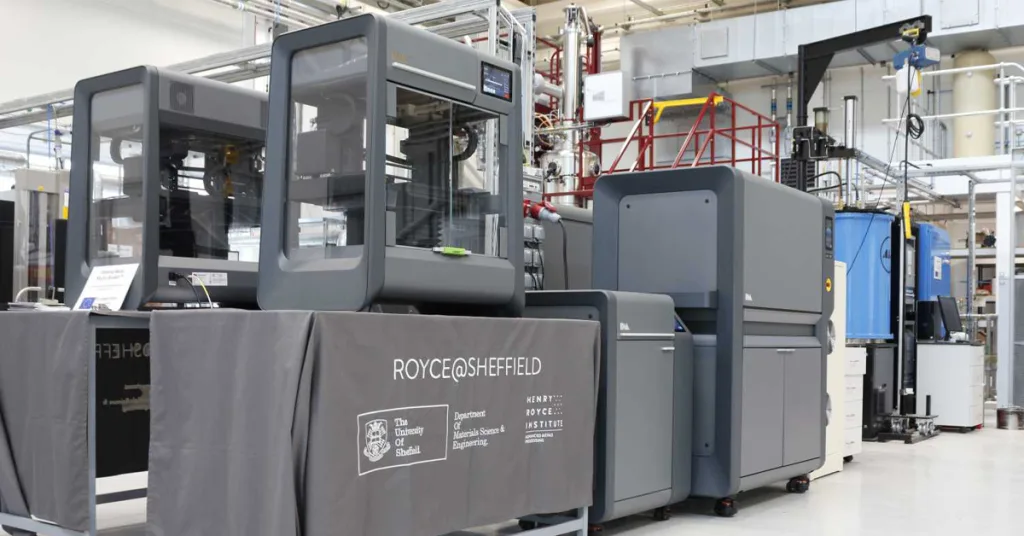
3D Printing in Engineering Education – Sheffield’s STEM Revolution
14Oct

3D Printing in Engineering Education – Sheffield’s STEM Revolution

Education 3D printing in Sheffield is transforming how students learn engineering. By combining CAD design, 3D scanning, and hands-on manufacturing,…

CELEBRATE ENGLAND IN THE EURO SEMI-FINALS!

ENJOY 20% OFF YOUR NEXT ORDER USING CODE:

ENG-EUR

HURRY! ONLY 66 COUPONS AVAILABLE

DISCOUNT CODE REQUIRED (MAX DISCOUNT £50) PROMOTION T&C’s APPLY AND VALID UNTIL 14/07/2024